
FACE-TO-FACE
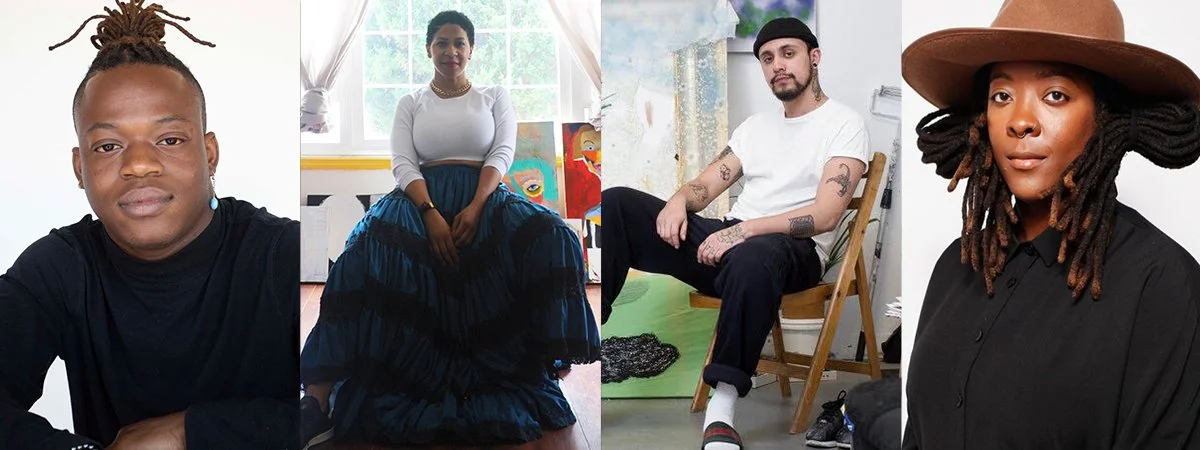
From left to right: Hakeem Olayinka, February James, John Rivas and Nina Chanel Abney
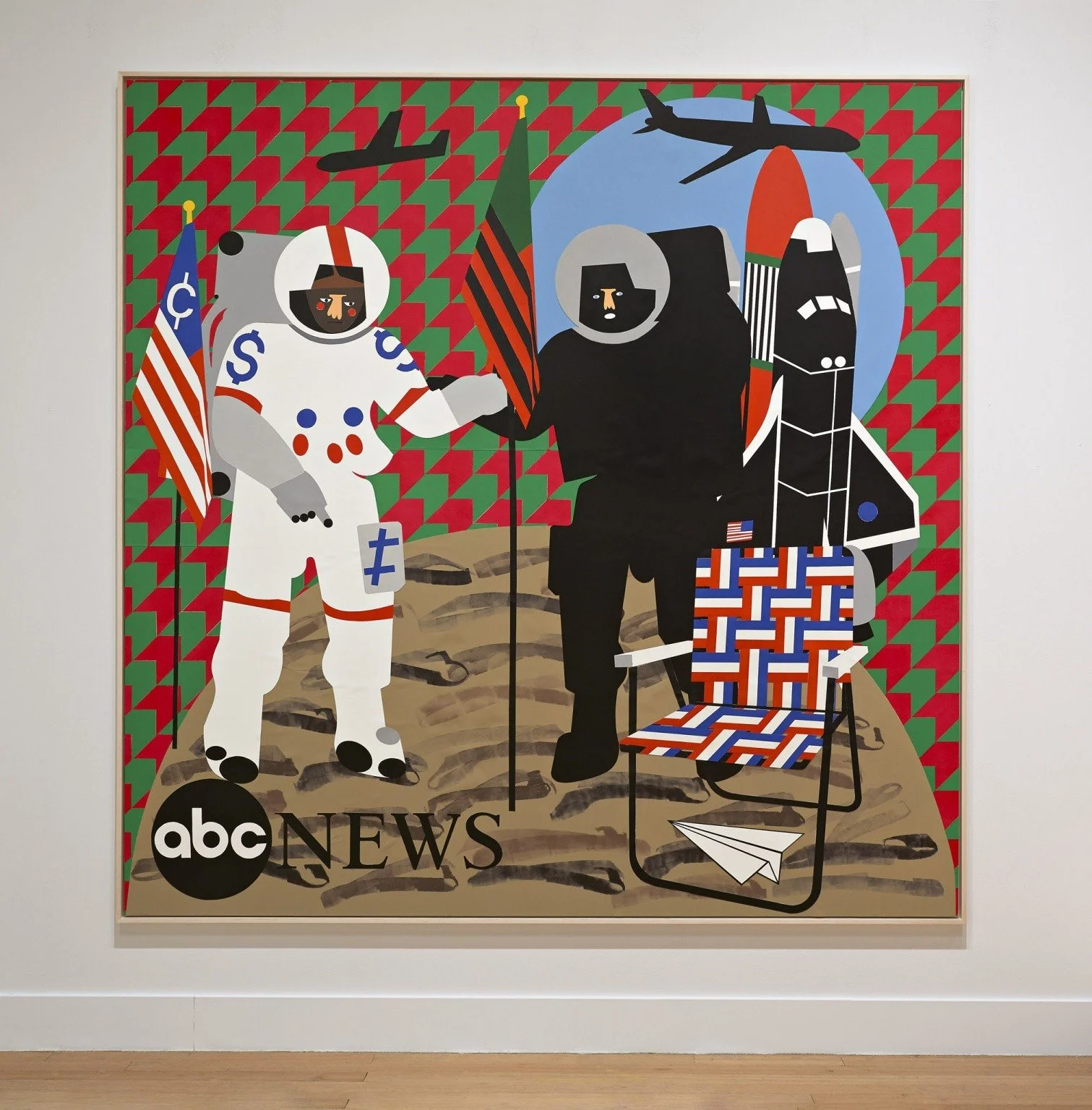
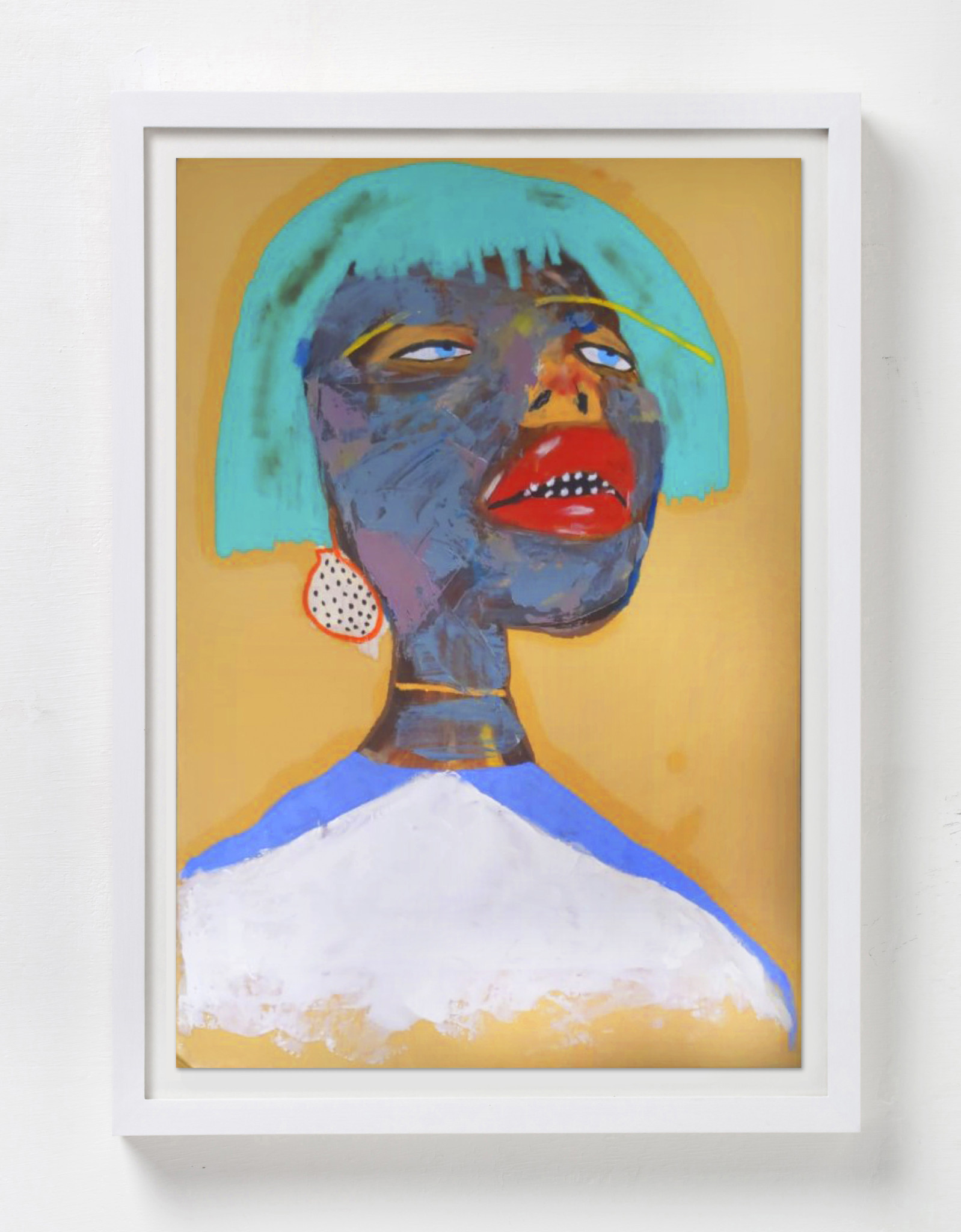
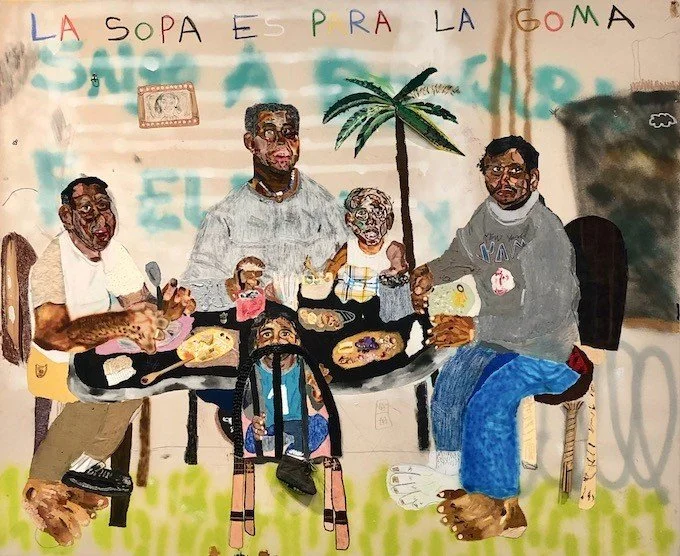
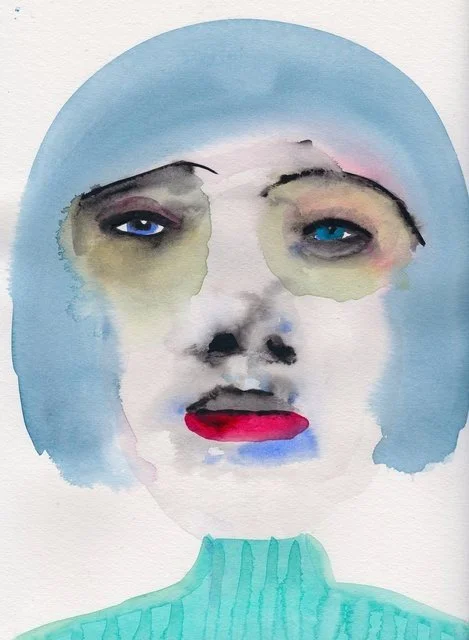
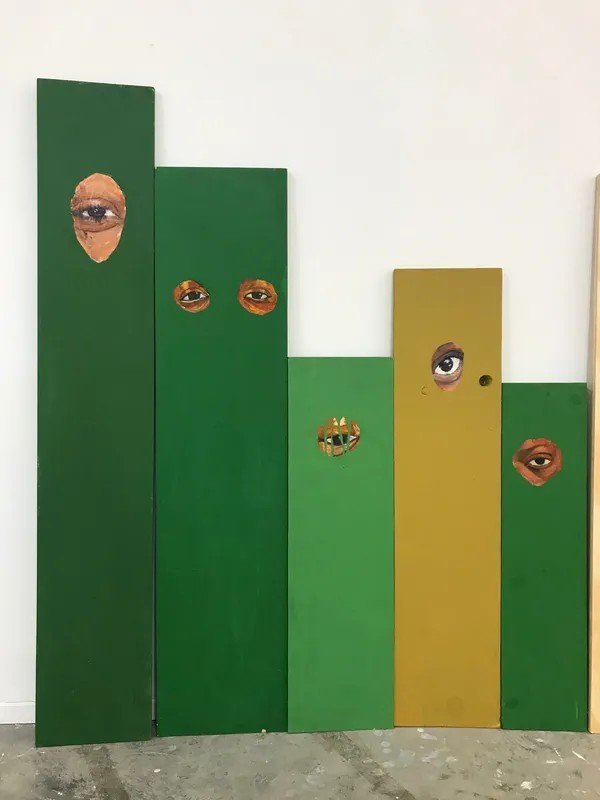
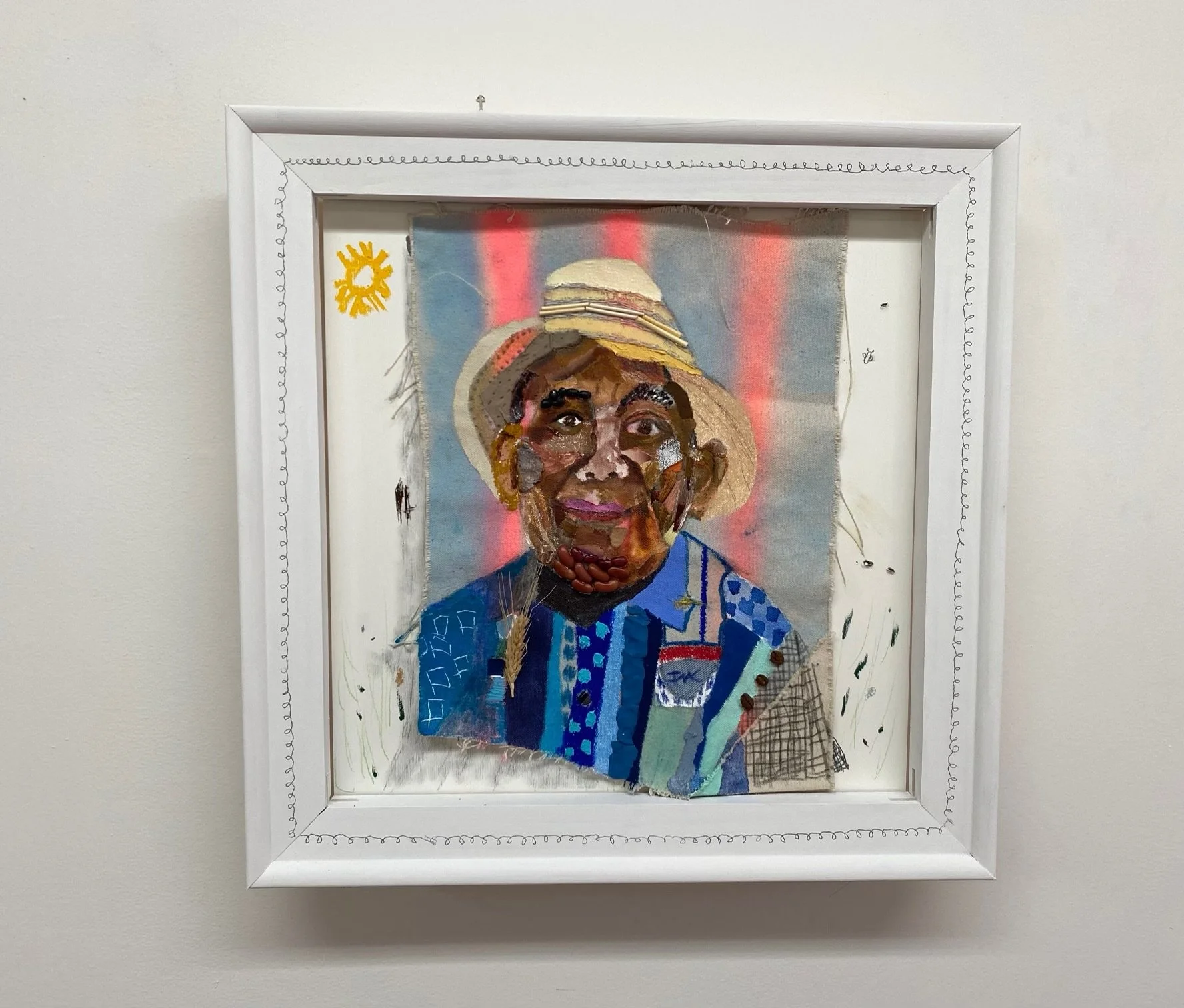
Group Exhibition featuring Nina Chanel Abney, Hakeem Olayinka, February James and John Rivas
For the last two years, the smallest members of our community have had to wear masks for a large percentage (if not the majority) of their lives. Up until this point, we have largely taken for granted that the cognitive development of children’t brains that come from seeing and interpreting faces would be a natural occurrence as they grew up. We now know that building their minds in this way requires work, that work inspiring this exhibition, Face to Face.
All of the participating artists in this show (Nina Chanel Abney, February James, Hakeem Olayinka and John Rivas) work within the long tradition of portraiture, but all abstract the face through geometry, unconventional material, or by questioning how obscurement of the face impacts our ability to recognize each other’s humanity.
Through geometric abstraction, bold color and identifiable signifiers, Nina Chanel Abney creates a world firmly invested in play, but never forgets to point towards the complexities of contemporary life for Black peoples. While Nina’s work often looks towards the external forces impacting our community, John Rivas looks inward, creating intimate portraits of his family and close friends, that intimacy reinforced by his unconventional use of materials to create these portraits. February James (who got her start as a makeup artist) through her washy, almost dream-like portraits, seeks to call on history both familial and obscured to bring attention to figures sometimes erased by time. Hakeem Olayinka with his “planks” and panels of obstructed faces peering through holes or averting their gaze away from the viewer speak to issues of intimacy, perception, and safety.
All four of these artists offer a unique perspective on the ways in which interpreting the face allows us to develop a deeper connection with ourselves and the communities we are a part of.
About the Artists
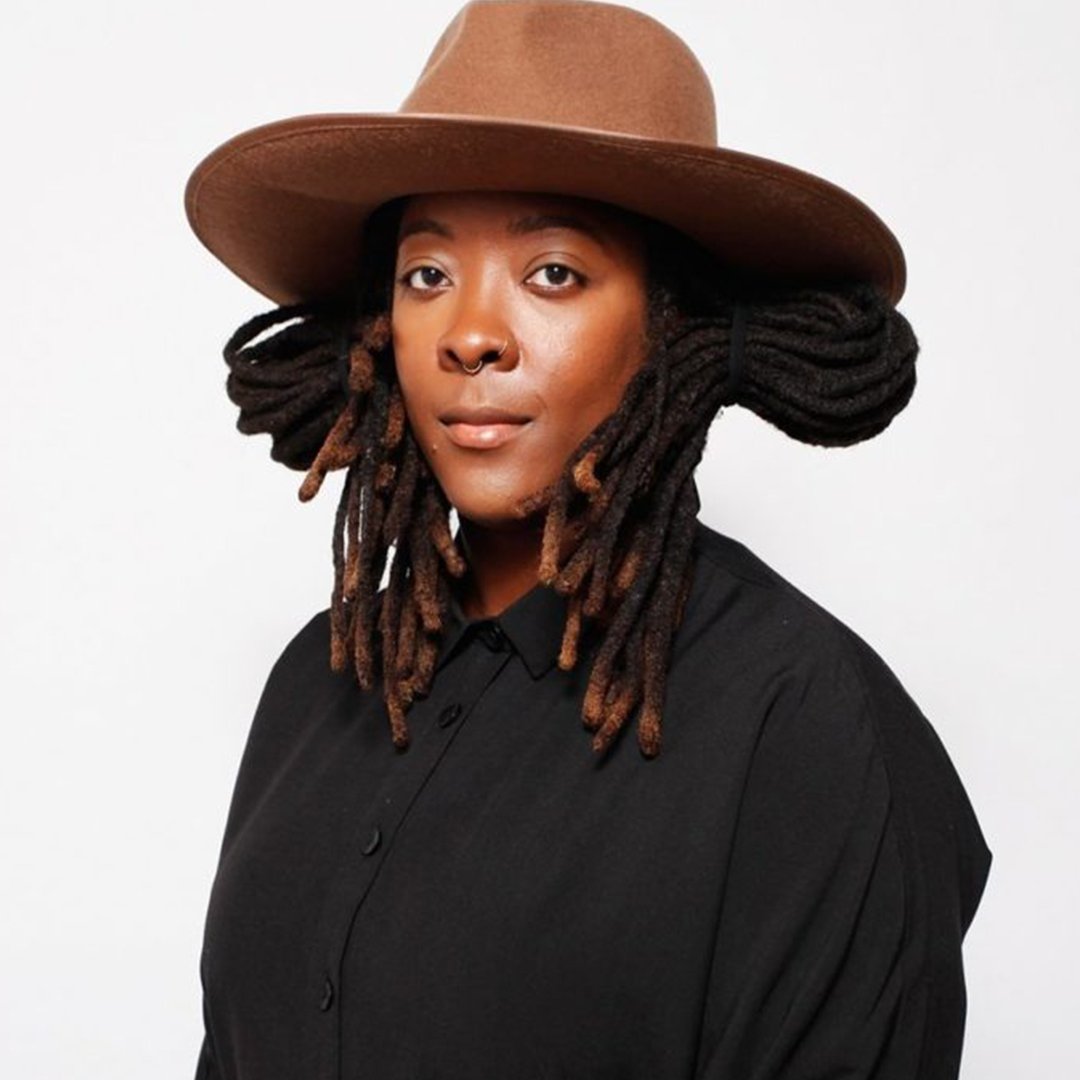
Nina Chanel Abney
Nina Chanel Abney
Combining representation and abstraction, Nina Chanel Abney’s paintings capture the frenetic pace of contemporary culture. Broaching subjects as diverse as race, celebrity, religion, politics, sex, and art history, her works eschew linear storytelling in lieu of disjointed narratives. The effect is information overload, balanced with a kind of spontaneous order, where time and space are compressed and identity is interchangeable. Her distinctively bold style harnesses the flux and simultaneity that has come to define life in the 21st century.
Through a bracing use of color and unapologetic scale, Abney’s canvases propose a new type of history painting, one grounded in the barrage of everyday events and funneled through the velocity of the internet.
Abney was born in Chicago and currently lives and works in New York.
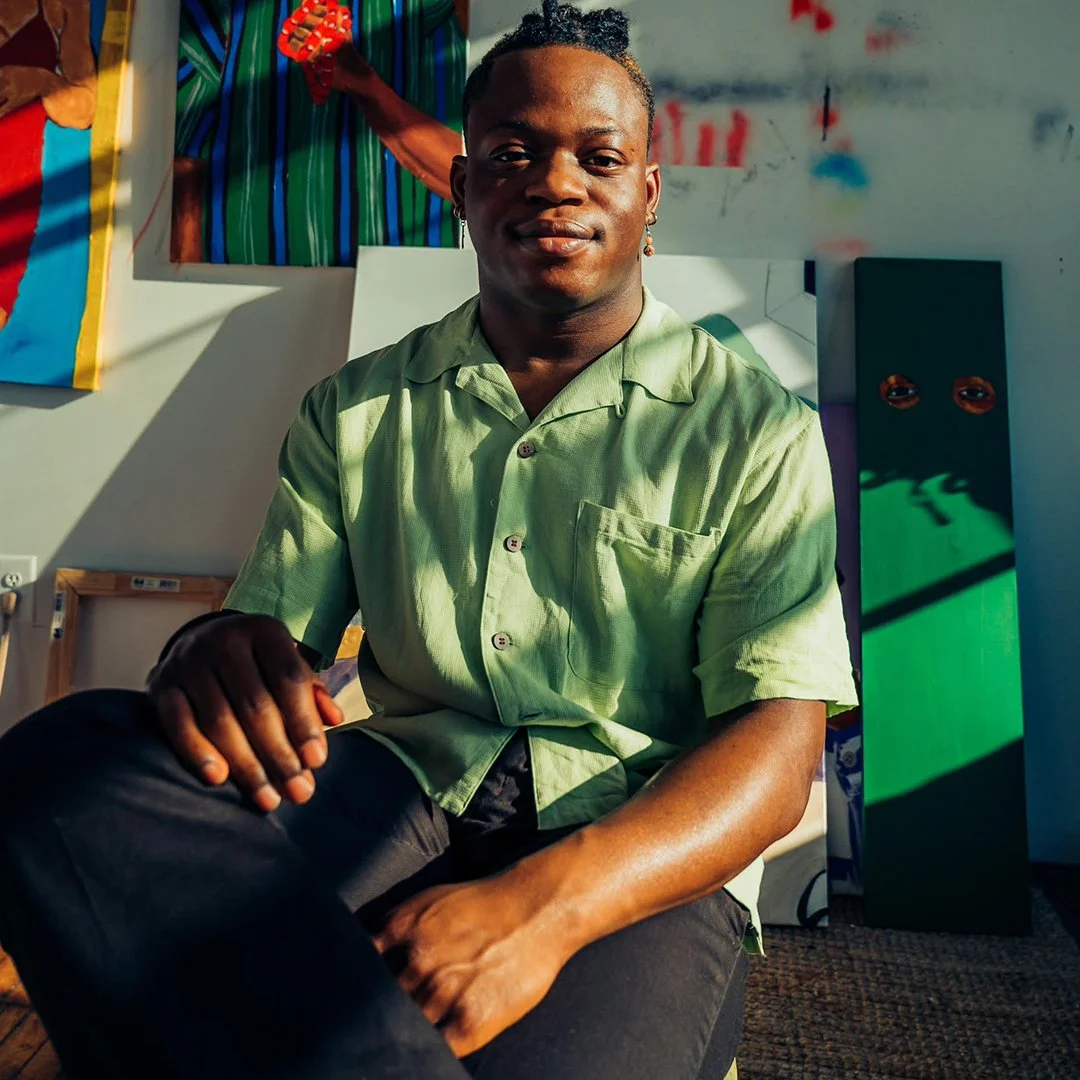
Hakeem Olayinka
Hakeem Olayinka is a Nigerian-American Washington DC native visual artist. His passion for art came early from watching cartoons, anime, and claymation movies. Later he went on to study at SUNY Purchase’s School of Art & Design and graduated in the fall of 2019.
Hakeem has a focus in painting and drawing though his work often takes on other forms like sculpture and installation. However, the work remains visually cohesive. His work features portraits of blacks figures often using himself as the subject. These figures can often be seen masked, downed, draped or just simply operating in these saturated worlds of color. His palette contradicts the expressions of the figure; they translate frustration through exhaustion.
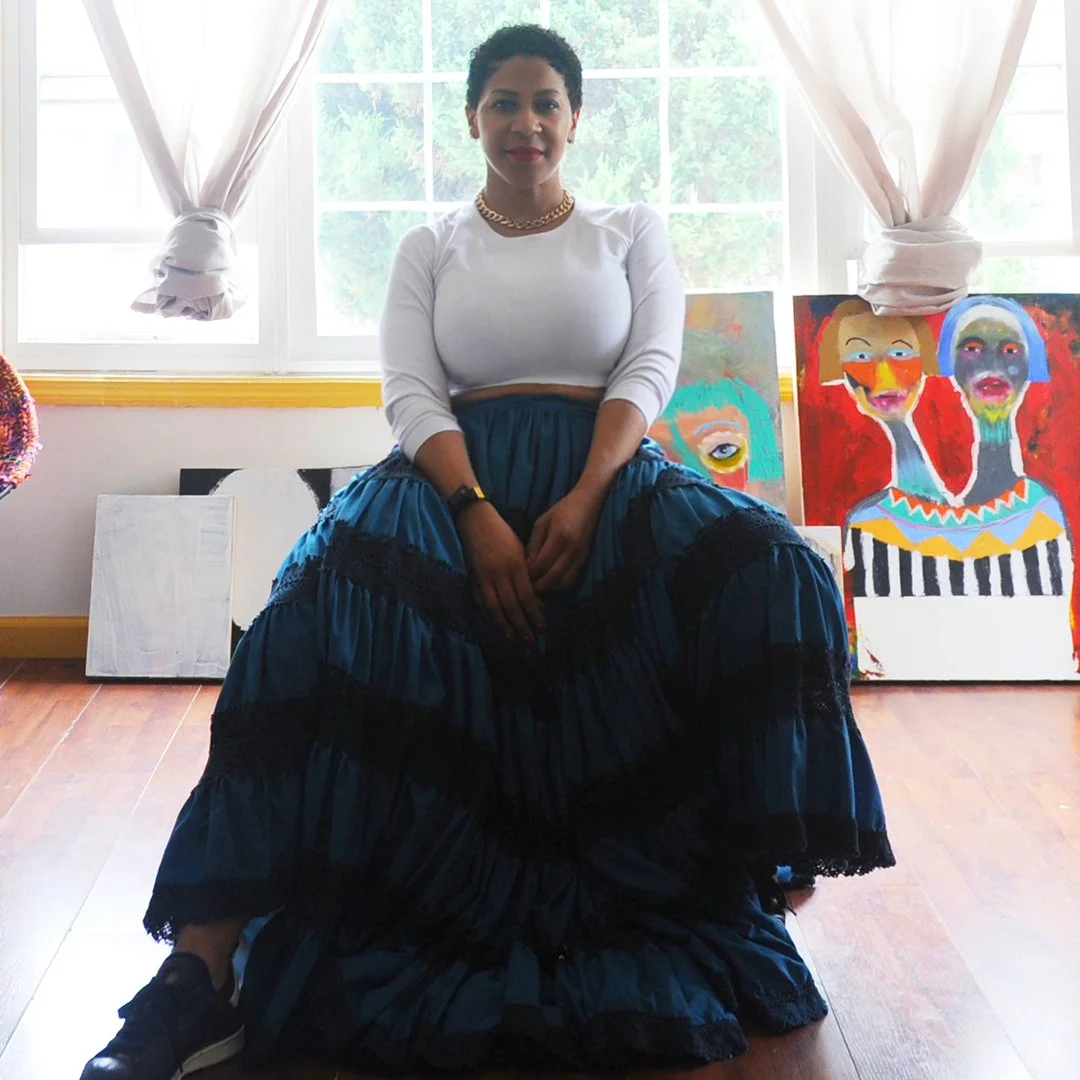
February James
Need bio copy for February James. There is something that seems like it could work in the PDF but nothing in the Word doc.
John Rivas
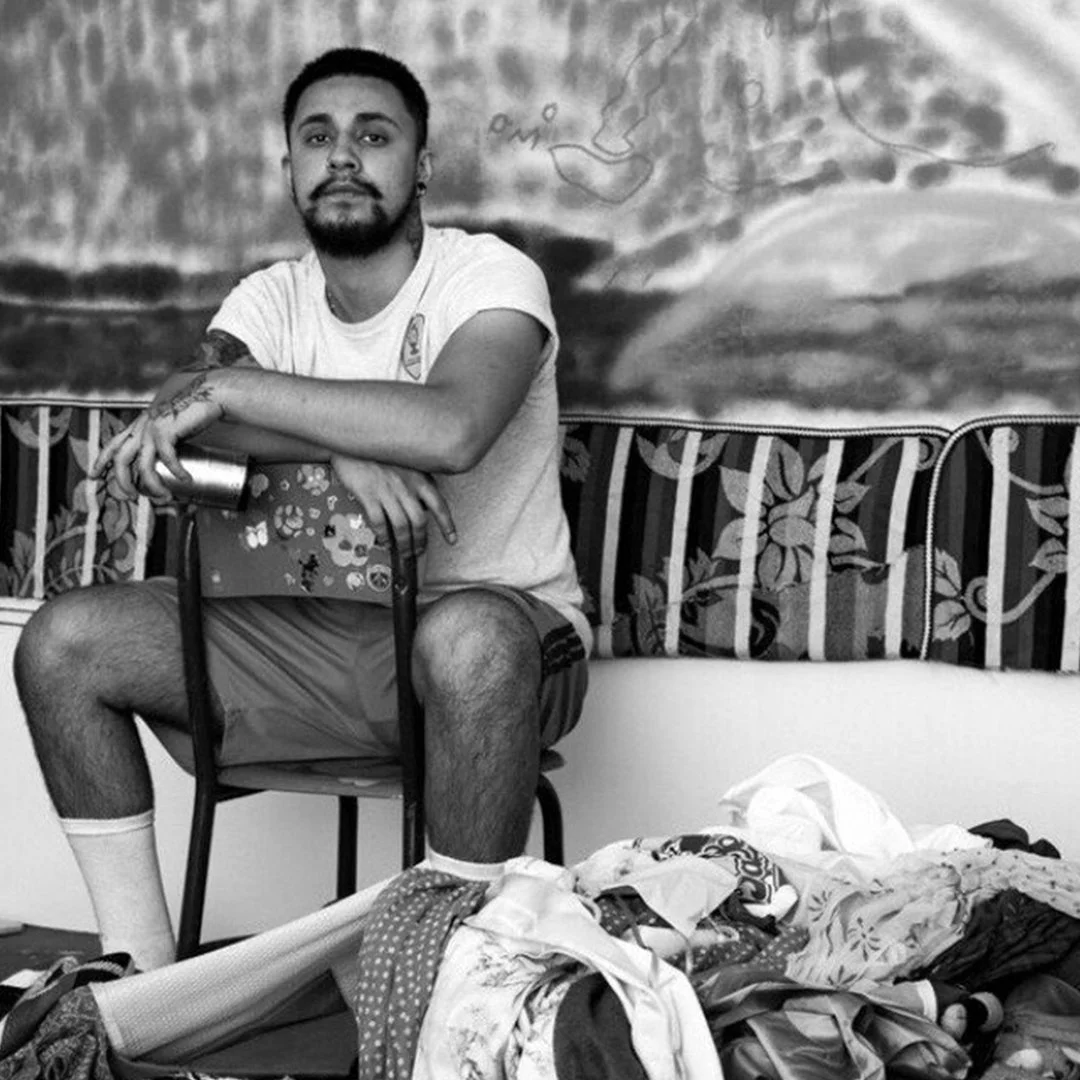
John Rivas is a figurative painter whose narrative is guided by the stories of his ancestors and loved ones. As a first generation American raised in Newark, New Jersey, Rivas’ artwork is enriched with tales of family members many of whom he’s met remotely or through photographs. He is concerned with the concepts of legacy, preserving the narratives of lost loved ones, and documenting his upbringing.
Rivas’ paintings occupy space like sculpture, juxtaposing unexpected objects, many of which are sourced from his childhood, against one another. His brush strokes and rubs of charcoal are expressive marks that add to the visual collage. Each painting celebrates the Latinx concept of family and community through the lens of his Salvadoran roots.